

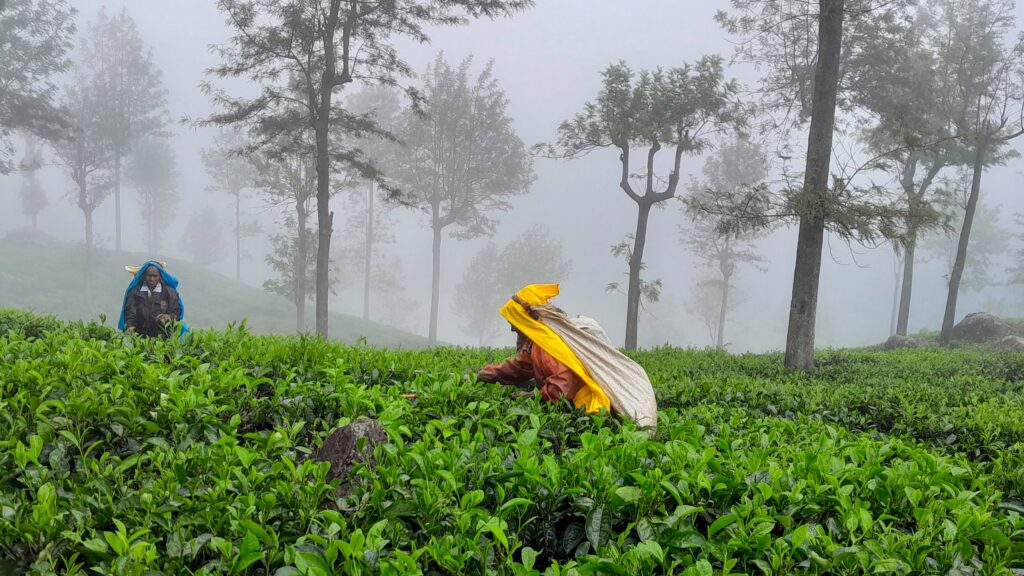
Franciscans International welcomes a gazette by Sri Lankan government announcing its decision to raise the effective daily wage of tea plantation workers to 1.750 rupees. The increase follows demands by workers unions, supported by civil society and faith-based organizations including Franciscans.
“The daily wage of tea plantation workers in Sri Lanka will be increased by 550 rupees. This should help workers to cover their daily needs after rocketing inflation of basic goods due to the financial crisis in Sri Lanka,” says Father Patrick Perera OFM in Colombo. “Hopefully, they can now also allocate some portion of this money to other needs, such as healthcare, housing, and education for their children.”
FI has previously called attention to the dire conditions of tea plantation workers in Sri Lanka at the UN Committee on the Elimination of Discrimination Against Women (CEDAW) and the UN Special Rapporteur on contemporary forms of slavery. Women and girls in particular face a multitude of challenges, ranging from unfair wages to limited access to education and health services. The prolonged economic crisis has pushed poverty levels to 24.5 percent in 2024, with the High Commissioner for Human Rights reporting that female-headed households and plantation workers are among those hardest hit.
Poor access to justice and impunity further fuel exploitation and gender-based violence. One emblematic case FI raised during Sri Lanka’s 2025 CEDAW examination was that of a young woman who was attacked and raped in 2001 while on her way to Sunday school. More than two decades later, following prolonged court proceedings and delays, she is still waiting for a final ruling in her case.
An increase of the daily minimum wage was among the recommendations Franciscans made to the Government of Sri Lanka. FI will continue to advocate for other urgently needed measures to protect the dignity of plantation workers, including improving access to education, strengthening the capacity of law enforcement officers, and a revision of land rights so that workers near plantations can legally own their houses.