

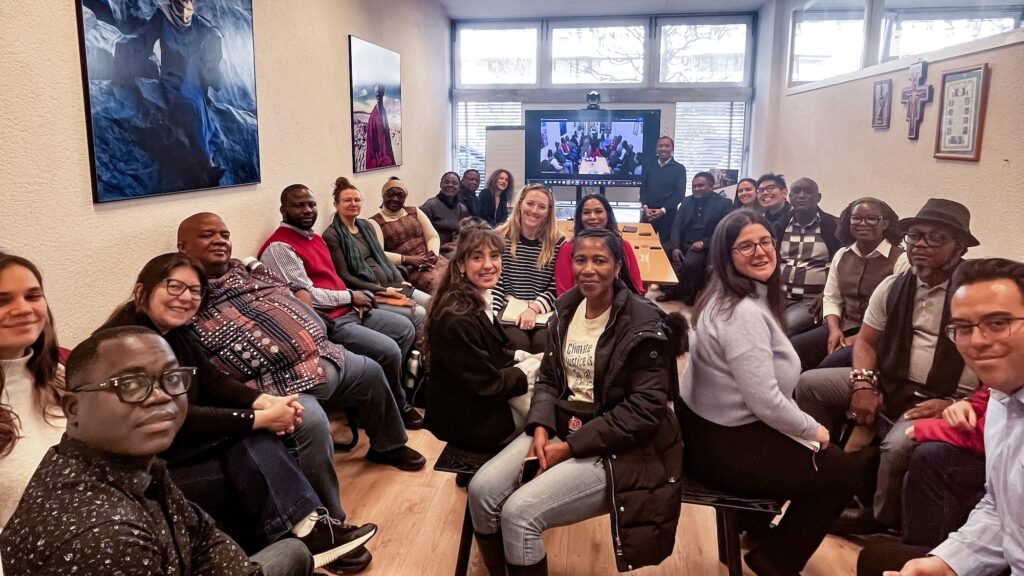
Franciscans International welcomed Father Agostinho Matlavele OFM from Mozambique and Rodrick Hollands, an activist and organizer from Solomon Islands, to take part in the pre-sessions for their countries’ Universal Periodic Review (UPR). Their visit to Geneva provided the opportunity to highlight a series of human rights issues identified by Franciscans and other local partners, that were submitted previously to the United Nations.
The UPR is a UN mechanism through which States examine each other’s human rights record and make suggestions to improve areas of concern. At the end of this process, the country under review decides it will accept and implement. These, in turn, provide a valuable tool for civil society and faith-based organizations working at the grassroots, as they provide concrete benchmarks to measure the action taken by authorities and hold them accountable.
Because civil society has only limited opportunities to intervene directly during the examination by States, UPR Info has organized pre-sessions since 2012, providing an opportunity to engage directly with diplomats and other stakeholders. Throughout the UPR process, FI and its partners in Mozambique and Solomon Islands, are calling attention to the following issues:
Mozambique
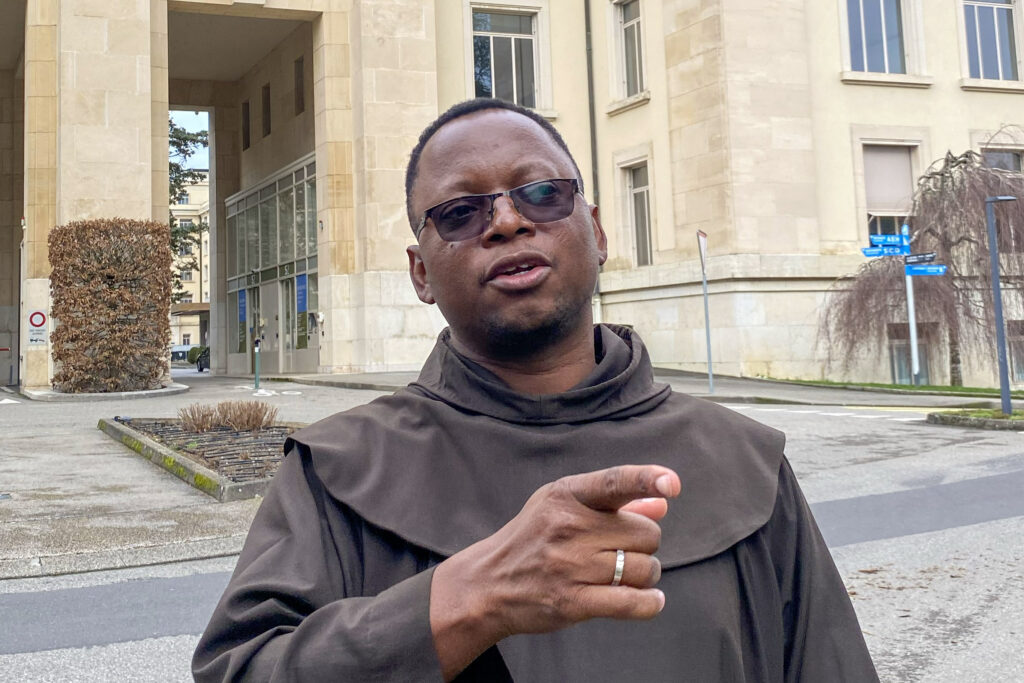
“We want the war to end. The people are saying this to their government in Mozambique. The same message should be said here, at the international level, at the United Nations.”
Key concerns: internal displacement, violent conflict, business and human rights
A violent insurgency in the northern Cabo Delgado Province, fueled by longstanding socio-economic inequalities has left over 1,3 million people in need of humanitarian assistance. More than 600.000 people are currently displaced, many of whom lack access to basic services, adequate infrastructure, and livelihood opportunities, and continue to be subjected to violence. Franciscans are urging the government to adopt a coordinated and multisectoral approach that prioritizes protection and psycho-social support for internally displaced people while ultimately ensuring the conditions for their safe return.
Meanwhile, counter-terrorism efforts by the government in northern Mozambique have instead resulted in grave human rights violations by military and security personnel. The absence of a functioning judiciary and lack of protection mechanisms for victims allows these violations to occur with impunity. In its UPR report, FI stresses the importance of ensuring accountability as a key step toward rebuilding trust with authorities.
An added factor is Cabo Delgado’s wealth of natural resources. The conflict has done little to dissuade the interest of transnational corporations, leading to situations of forced evictions of locals and inadequate compensation for the loss of land and livelihoods. The military has been accused of prioritizing the defense of extractive projects over civilian protection. Franciscans are calling for the suspension of all transnational projects that might contribute to the conflict and to establish clear thresholds for future and ongoing projects that ensure the prevention of grave human rights violations.
The review of Mozambique will take place on 5 May 2026. The final report will be adopted at the 63rd Session of the Human Rights Council in September 2026.
Solomon Islands
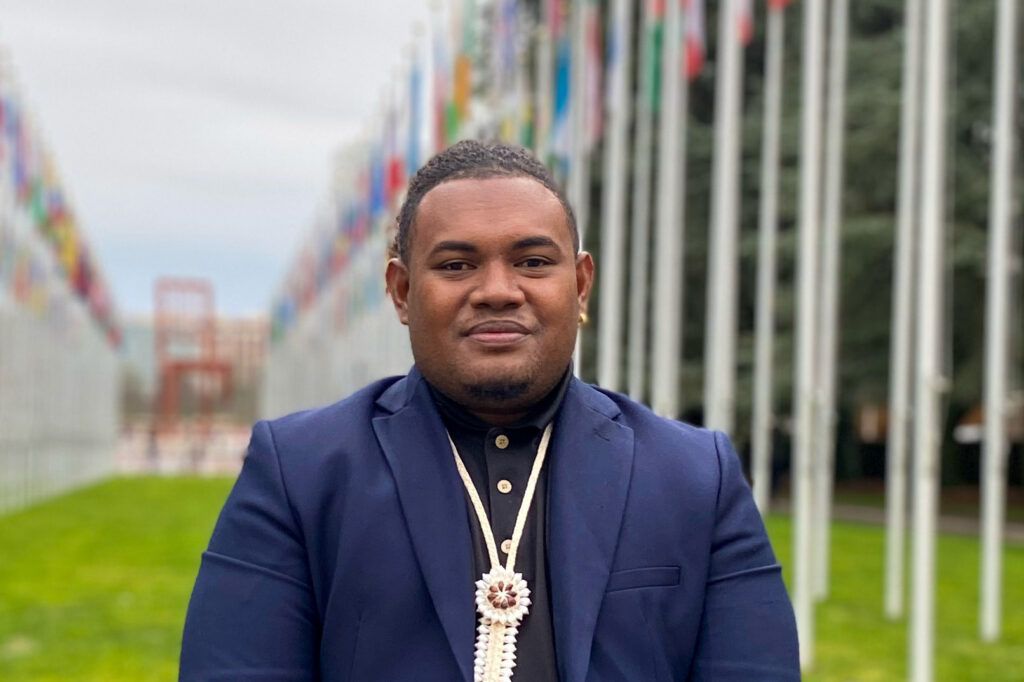
“Climate change and human rights issues are global issues, and it cannot be tackled only by a single civil society organization […] It requires unity between different stakeholders, civil society, and, of course, the government.”
Key concerns: logging and mining, rights of women and children, the right to a healthy environment
Industrial logging in the Solomon Islands has affected all aspects of life, with over 240.000 hectares of tree cover lost since 2024. An outdated regulatory framework that neither reflects local realities nor contain free, prior and informed consent provisions, has excluded local communities from decision-making and compensation, while environmental impact assessments have proved woefully inadequate. The growing mining industry – in part facilitated by deforestation – is generating similar problems. In response, Franciscans are calling on the government to immediately pass into law both the latest iteration of the Forestry bill, which has been pending with the Attorney General’s Office since 2020 and the Mineral Resources bill 2025, which is on the legislative agenda for 2026.
The impact on food and water has been particularly severe. Pollution combined with deforestation have decimated local agriculture, while transport barges have damaged coral reefs and fishing grounds. Invasive species, introduced on imported equipment, are devastating cash crops. Likewise, water sources have been contaminated and blocked, increasing the risk of flashfloods. Franciscans recommend that the government strengthens the Ministry of Environment, so that it can conduct robust and effective environmental impact assessments. Communities already facing soil degradation should receive restitution and training in new farming methods.
Finally, women and young girls have fallen victim to sexual exploitation and human trafficking, with girls as young as 13 years old being coerced into relationships with foreign workers. When foreign workers leave, the women are left facing stigma and marginalization. The situation is further aggravated by an influx of alcohol, which has increased domestic abuse cases. Franciscans are calling on authorities to raise the legal marriage age to 18, establish a complaint mechanism at the provincial level, and provide adequate funding for support, counseling and rehabilitation services for victims.
The review Solomon Islands will take place on 11 of May 2026. The final report will be adopted during the 63rd Session of the Human Rights Council in September 2026.