

A persistent drought in southern Madagascar, where 85 percent of the population still depends on agriculture, has pushed over 1.47 million people into food insecurity and extreme poverty. The dire living conditions have spurred migration to the north, creating tensions between displaced and host communities. With Madagascar being the fourth most vulnerable country to climate change in the world, environmental degradation and the absence of a holistic policy to meet this new reality are further exacerbating the crisis.
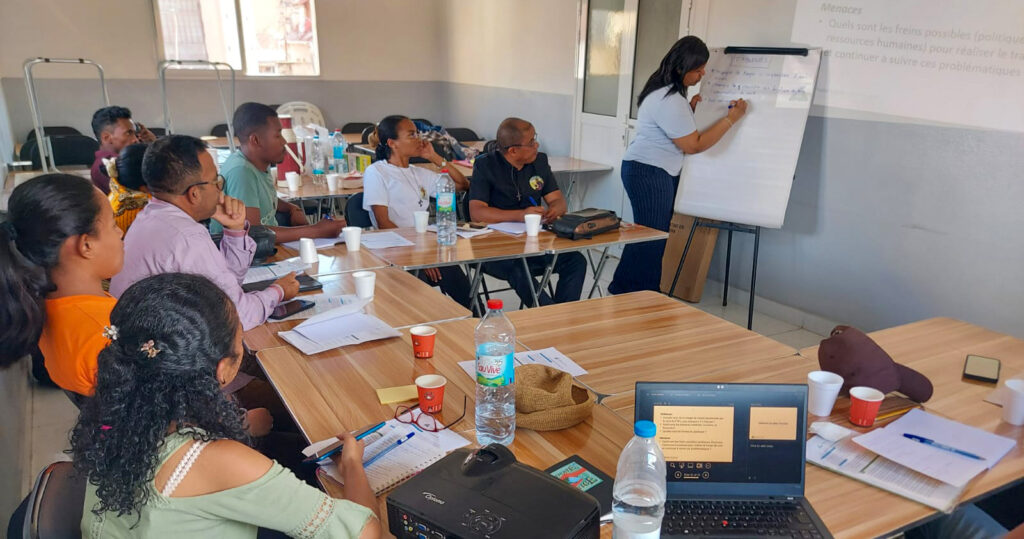
Franciscans International recently visited Antananarivo to conduct a workshop and a series of meetings with civil society and other key stakeholders, such as diplomatic missions and UN representatives, and aimed at implementing relevant recommendations accepted during Madagascar’s 2025 Universal Periodic Review. This follows a 2024 training and fact-finding mission by members of the Secular Franciscan Order with displaced communities and local officials. Their findings formed the basis of a joint stakeholders’ report by FI and the participation of two Franciscans during the UPR pre-session of ahead of Madagascar’s review, during which 80 percent of Franciscan recommendations were reflected.
However, since the adoption of the report, the political situation in Madagascar has changed dramatically. After widespread demonstrations in September 2025 led to the ousting of President Rajoelina, a transitional government under Colonel Randrianirina has committed to addressing the core demands of Gen Z protestors, including the lack of public services, rampant corruption, and poverty.
While there is a general perception of a more open civic space under the new administration, no specific priority has been given to the implementation of UPR recommendations. With seven outstanding country reports to UN Treaty Bodies and the National Human Rights Institution left without Commissioners since July 2025, the human rights agenda does not seem a priority for the new government.
In this context, part of the workshop facilitated by FI focused on reinforcing networks with civil society and faith-based organizations and strengthening local Franciscan capacity to take ownership of the UPR process. As part of this strategy, the Secular Franciscans are planning a second fact-finding mission in Mahajanga in mid-2026 to assess the implementation of accepted UPR recommendations and provide feedback to authorities. FI will continue to rely on these findings to raise the human rights situation in Madagascar with the UN, including through interventions at the next session of the Human Rights Council and at Committee on the Elimination of Discrimination against Women (CEDAW).