

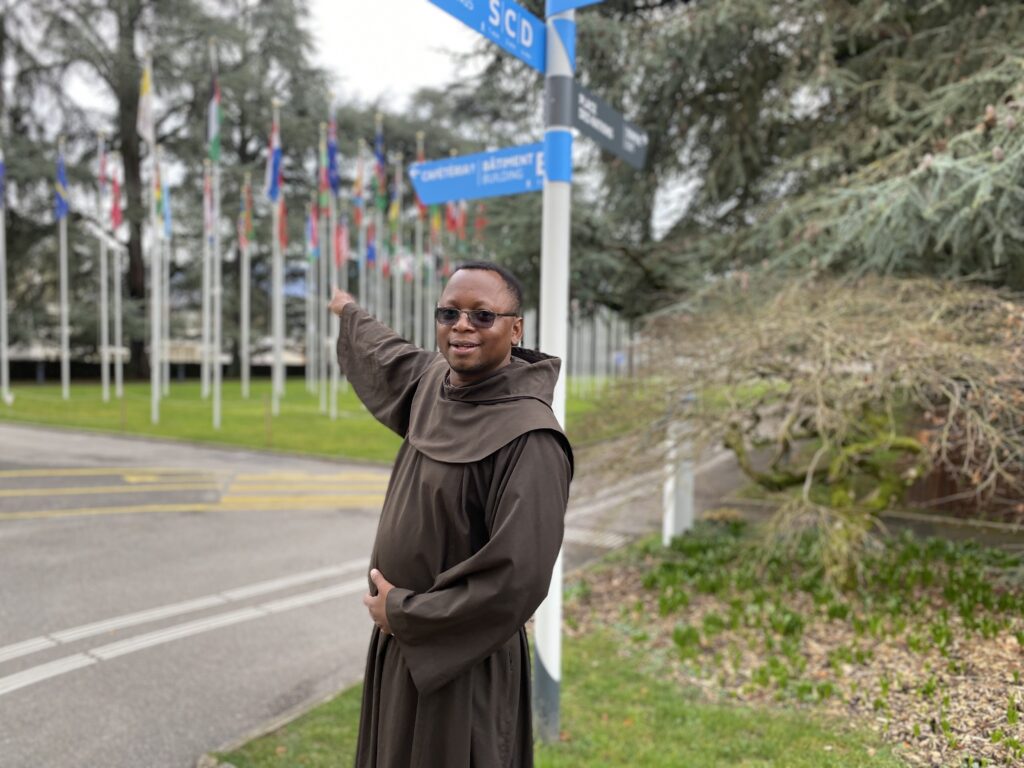
“I have to speak and use these microphones because here there is hope.”
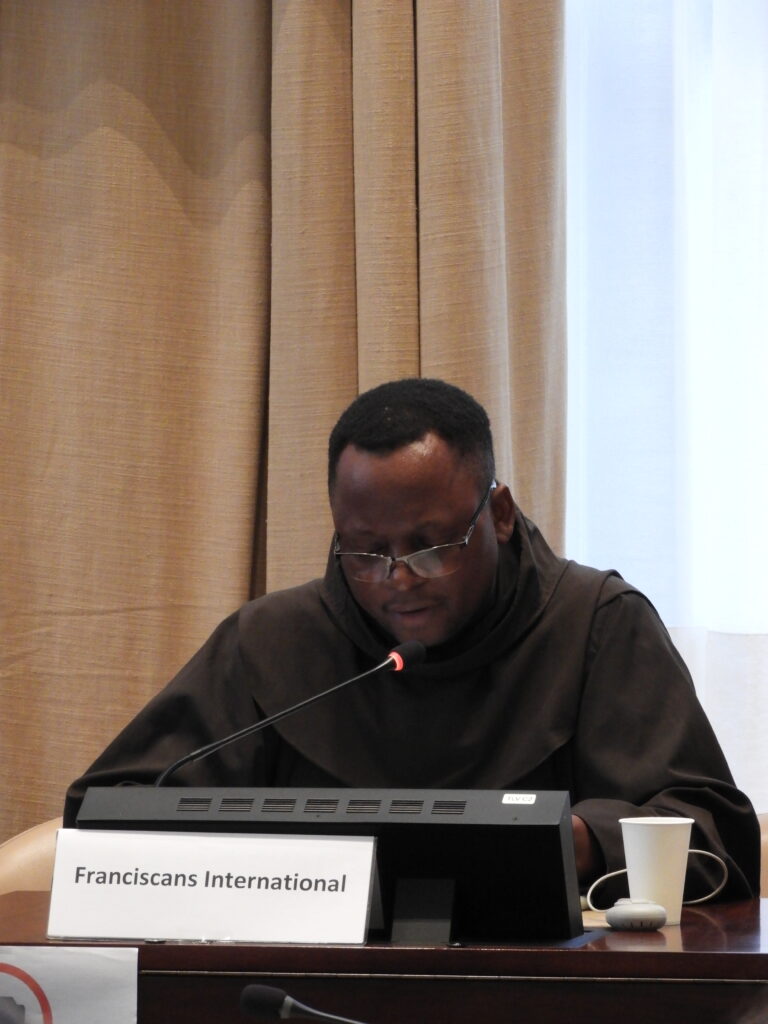
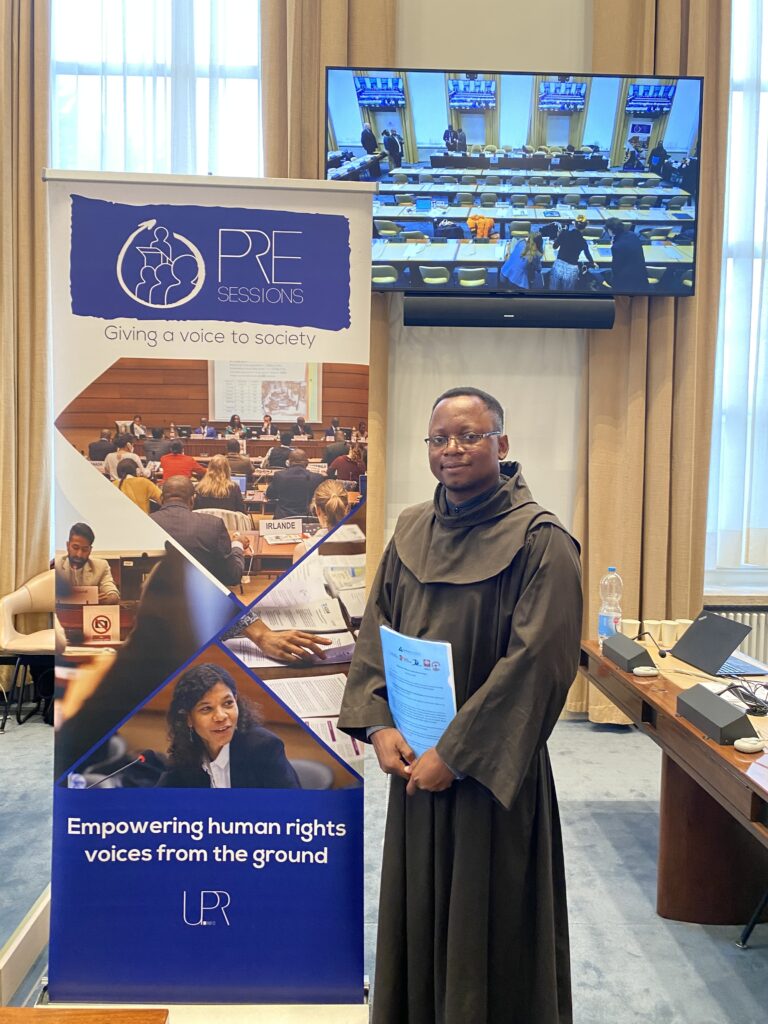
When Brother Agostinho Matlavele OFM, speaks at the United Nations (UN), he carries a simple but urgent message: the people of Cabo Delgado want peace, dignity and to be heard. Speaking on behalf of Franciscans International (FI) during the civil society pre-sessions of Mozambique’s Universal Periodic Review (UPR), a UN process where States examine one another’s human rights records and propose concrete improvements, his voice reflects both deep Franciscan spirituality and a growing commitment to human rights advocacy.
Born and raised in Mozambique, Brother Agostinho’s vocation is rooted in lived experience. “Coming from a situation of poverty,” he explains, “it was easy for me to identify my faith with the poverty of Jesus and of Saint Francis.” For him, Franciscan life is not only about renouncing material wealth, but about choosing proximity to those who suffer and defending their dignity when it is threatened.
That calling has led him to international advocacy, through which he seeks to ensure that the realities of Cabo Delgado are not forgotten in global decision-making spaces. Once known for its natural beauty and abundant resources, Cabo Delgado is now widely associated with conflict and displacement. Violence involving insurgent groups and government forces has forced hundreds of thousands of people to flee their homes, leaving behind land that sustained their families for generations. As of today, more than one million people in northern Mozambique need humanitarian assistance, in a context marked by insecurity and severe funding shortages.
“The communities are the ones who suffer,” Brother Agostinho says. “They leave their homes to escape war, they lose their land where they cultivated food, and they are resettled in places they do not know.” Fisherfolk can no longer fish. Farmers can no longer farm. Many displaced families now live in resettlement sites where resources are scarce, and safety remains uncertain.
While Brother Agostinho is not based in Cabo Delgado himself, his advocacy is shaped through close collaboration with Franciscan sisters and friars working directly with affected communities. For years, Franciscans on the ground have accompanied families displaced by violence, provided pastoral and humanitarian support in resettlement camps, and documented human rights violations. This collaborative work, together with preparatory workshops, submissions and sustained engagement through FI, made it possible for voices from Cabo Delgado to reach Geneva. Testimonies shared with Brother Agostinho shortly before his travel ensured his advocacy reflected lived realities rather than abstraction.
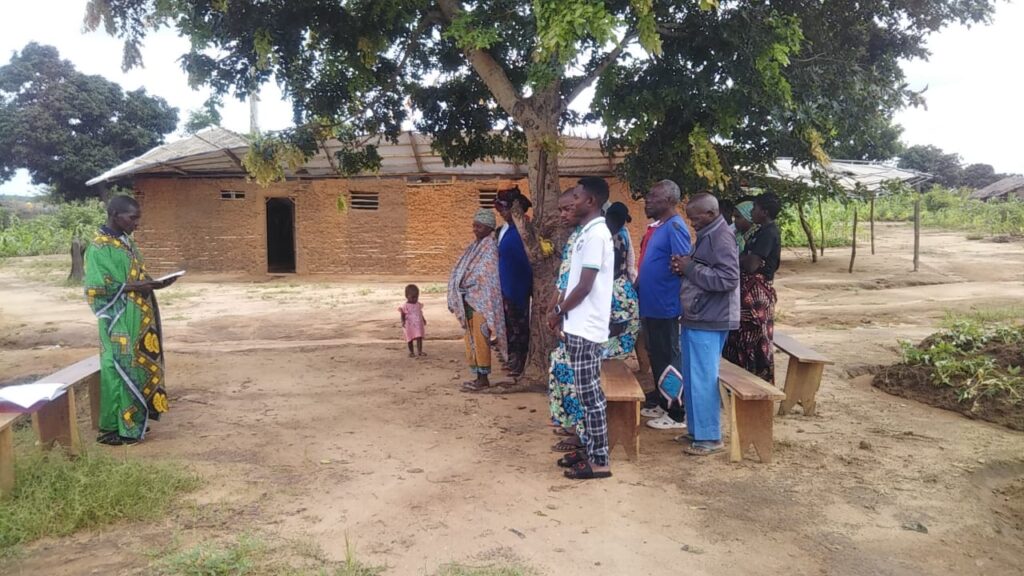
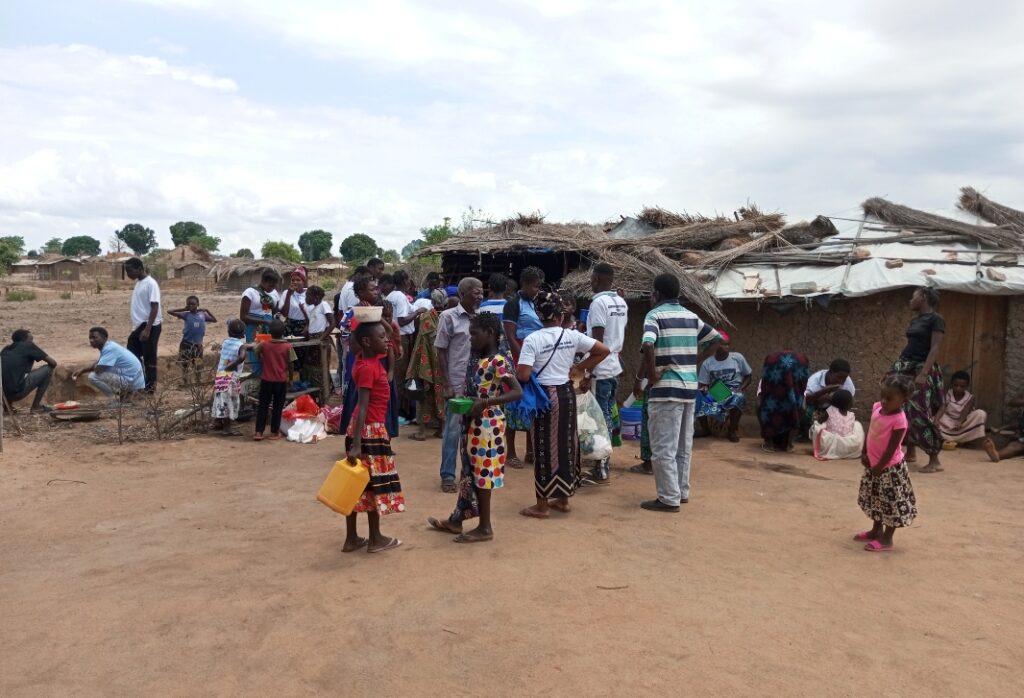
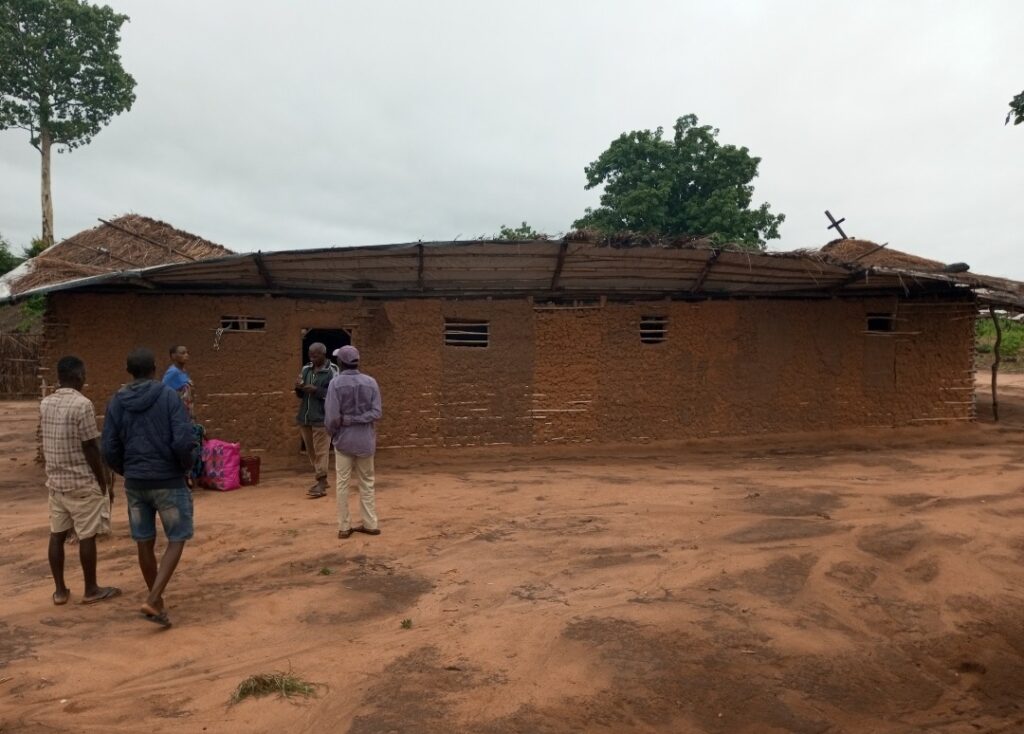
Women and children, he stresses, are particularly vulnerable. “In situations of war, men may be able to flee more easily, but women and children do not have the same flexibility.” Reports of sexual violence, exploitation, and children going missing are deeply troubling. In resettlement sites, women may face abuse and harassment when trying to secure food for their families. “We hear testimony that women suffer just to have something to eat,” he says. “This vulnerability continues even where people are supposed to be safe.”
At the UN, Brother Agostinho also raised concerns about how large-scale extractive projects, particularly in the gas sector, are aggravating the conflict in Cabo Delgado. Communities face a double displacement, first from violence and then through forced relocation linked to economic development. Excluded from meaningful consultation and denied a share in the benefits of these projects; families lose ancestral lands that are central to their identity and survival. “The land is sacred,” he explains. “It is inherited from generation to generation. To tell people to leave because there is a project is very difficult.”
At the same time, security forces are often deployed to protect commercial infrastructure rather than civilian populations, exposing communities to abuse and deepening resentment. In such conditions, extractive development does not bring stability but instead aggravates human rights violations and fuels further insecurity.
His engagement with Franciscans International marked a turning point in how Brother Agostinho understands his Franciscan mission. “Before, we focused mainly on charity, responding to immediate needs,” he reflects. “With Franciscans International, we discovered regional and international advocacy, helping people to claim their rights.” It is work that requires patience and perseverance, as change through international mechanisms often unfolds only over time. For him, this partnership completed what was missing in the Franciscan charism in Mozambique.
As Coordinator of the OFM Commission for Justice, Peace and Integrity of Creation (JPIC) in Mozambique, Brother Agostinho works to raise awareness among fellow friars and younger generations that Franciscan life is not only spiritual but deeply engaged with the realities of injustice. “Justice and peace are the Franciscan charism in action,” he says.
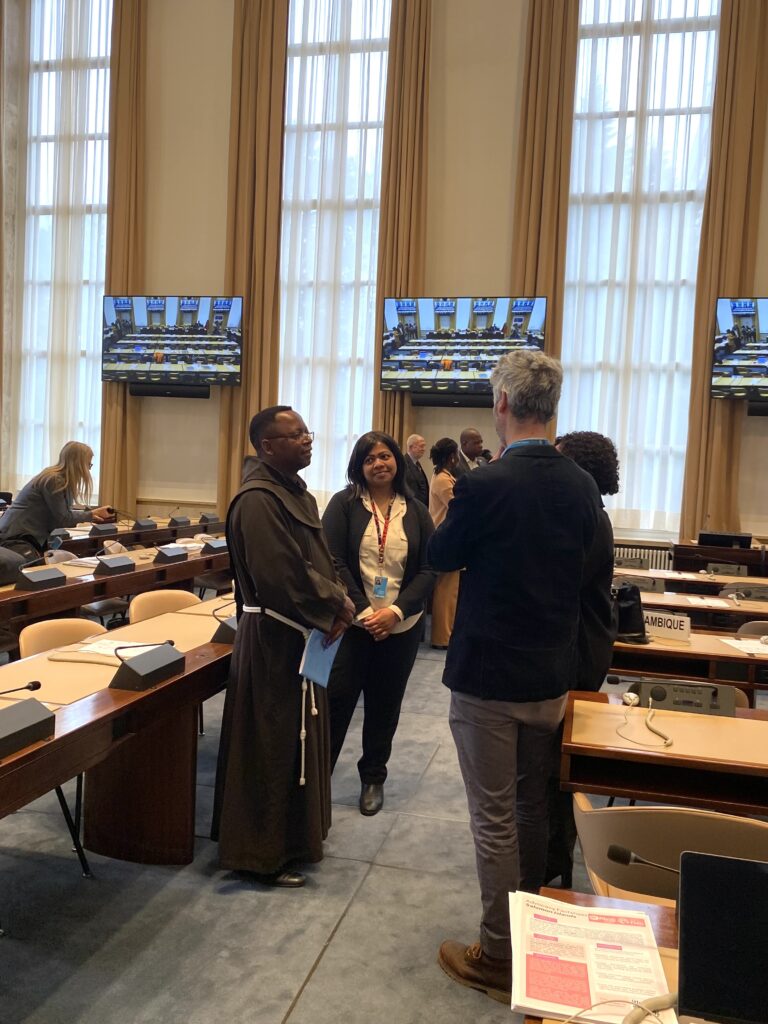
Taking the floor during the UPR pre-sessions, he describes the experience as seeing a green light at the end of the tunnel. “It is all or nothing,” he reflects. “I have to speak and use these microphones because here there is hope.” After his intervention, diplomats approached him to learn more about Mozambique. “It showed me that our suffering is not invisible.”
Despite the gravity of the situation, Brother Agostinho remains anchored in hope. “As Christians, we must always hope,” he says. “In the midst of chaos, we believe that evil does not have the last word.”
“For the people of Cabo Delgado,” he concludes, “the message is simple: we want peace, and we want our land back.” Through Franciscan presence at the UN, their suffering is no longer reduced to numbers alone but heard as a call to conscience.