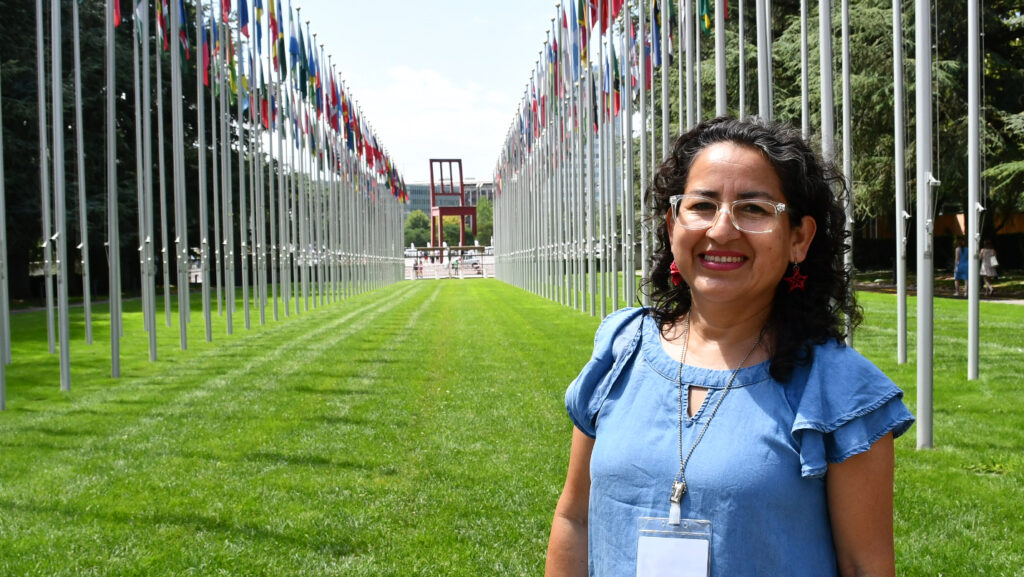
On 21 September 2016, armed men – some of them wearing uniforms identifying them as members of the Philippines’ drug enforcement agency – pulled up outside the house of Amelia Santos. “I cannot forget the pain when I recall that day. It was like a movie,” she says. The armed men moved into the neighborhood and started shooting. “Afterwards, I saw my husband lying on a table, his face and body covered in mud and blood […] At that moment, I knew I needed to be strong.” Afterward, she learned that her husband had been shot 28 times.  
 
Her was one of the thousands killed extrajudicially in the Philippines’ brutal ‘war on drugs’ waged under former President Duterte. While the government admits that there are approximately 6.000 victims, civil society organizations have documented over 30.000 cases. The killings have continued despite promises made by a new administration that took power in 2022. For the victims and their families, who are disproportionately from poorer and marginalized communities, there has been little hope of finding justice through the courts in the Philippines.  
 
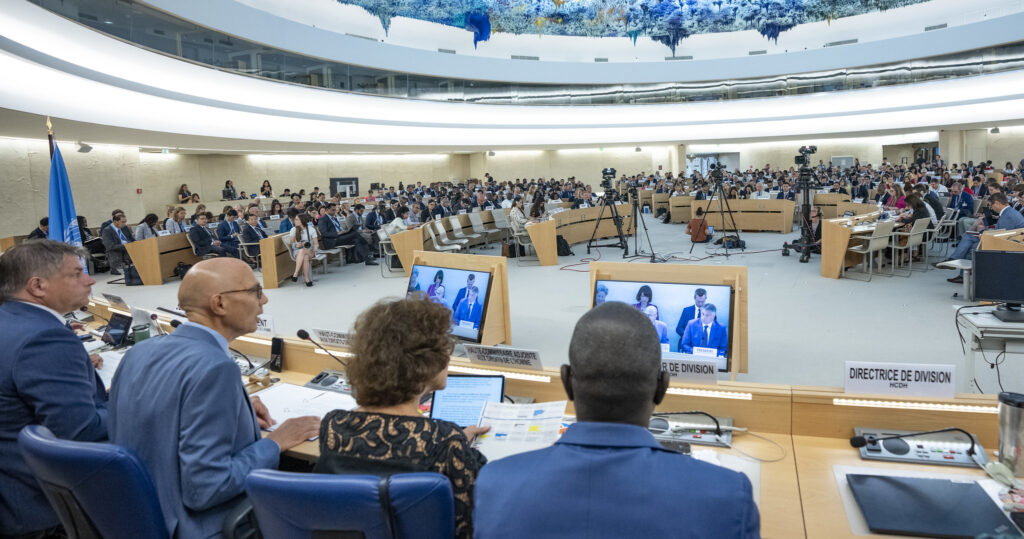
Instead, they have turned to the United Nations, calling on the Human Rights Council to support investigations that might eventually lead to accountability. Franciscans International, working closely with sisters and brothers who support victims in the Philippines, has been one of the organizations to offer a platform to family members. Such first-hand experiences are also essential in providing a critical perspective on initiatives such as the UN Joint Program on Human Rights, that have so far failed to effectively address human rights violations in the country.  
 
“We are so hungry for justice. We ask you to help us obtain justice and ensure that the war on drugs is not forgotten. Your support will give us new hope – us who are fighting for justice for our loved ones,” Ms. Santos said while participating in a side event during the Human Rights Council. “We hope and pray that you join us by giving us value.” 

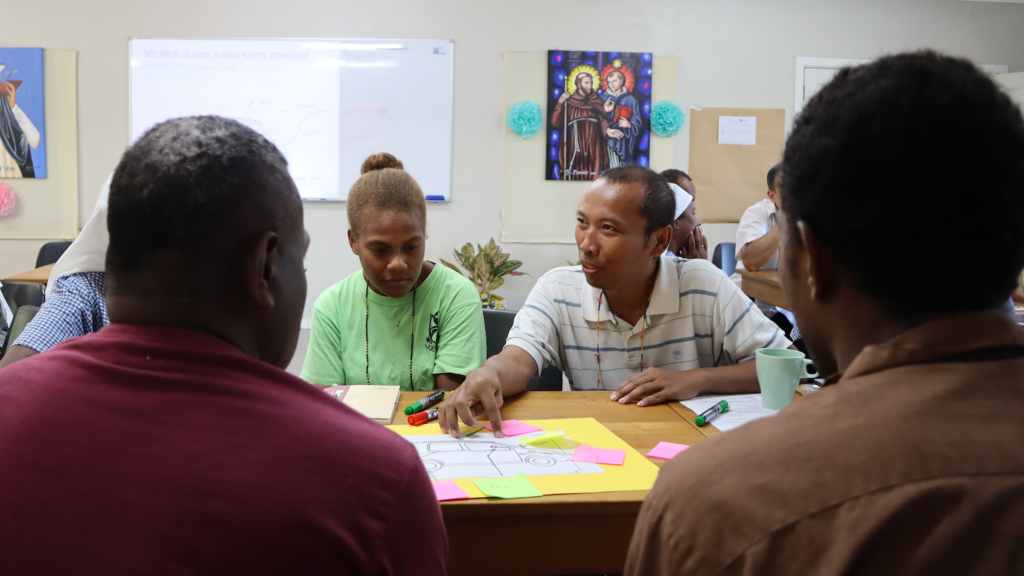
The ‘war on drugs’ is only one of many human rights issues confronting Filipinos. That is why in September 2022, FI visited the country to conduct a mapping of current challenges and host a workshop so that Franciscans and their partners can continue to effectively bring these problems to the UN.  
 
During this visit, one of the key concerns identified by Franciscans was the damage caused by industries such as mining and geothermal energy. Although ostensibly a pathway to development, these projects have a devastating impact on the environment. Weak regulations and oversight, combined with corruption, all contribute to insufficient protection for affected communities. These projects also further aggravate the already negative impacts of climate change in the Philippines, a country that is particularly vulnerable to extreme weather events. 

Today, the Philippines is facing a situation where a new government has made some commitments at the UN to improve the country’s troubled human rights record but has so far failed to live up to its promises. Instead, a climate of impunity continues to fuel human rights violations and attacks against those who stand up for justice. As long as this context persists, the Human Rights Council should not turn a blind eye to the Philippines. Franciscans remain committed to ensuring that these challenges are raised with the international community.

Sri Lanka has been marked by long-standing ethnic tensions and clashes. While the civil war ended in 2009, the lack of social cohesion and a failed reconciliation process are still fueling violence. During April 2019’s Easter celebrations, a series of suicide bombings in three churches and three hotels killed over 250 people, which rekindled old grievances. The human rights situation further deteriorated because of an economic crisis that sparked the Aragalaya mass protests, which led to the eviction of then-president Gothabaya Rajapaksa in 2022. 

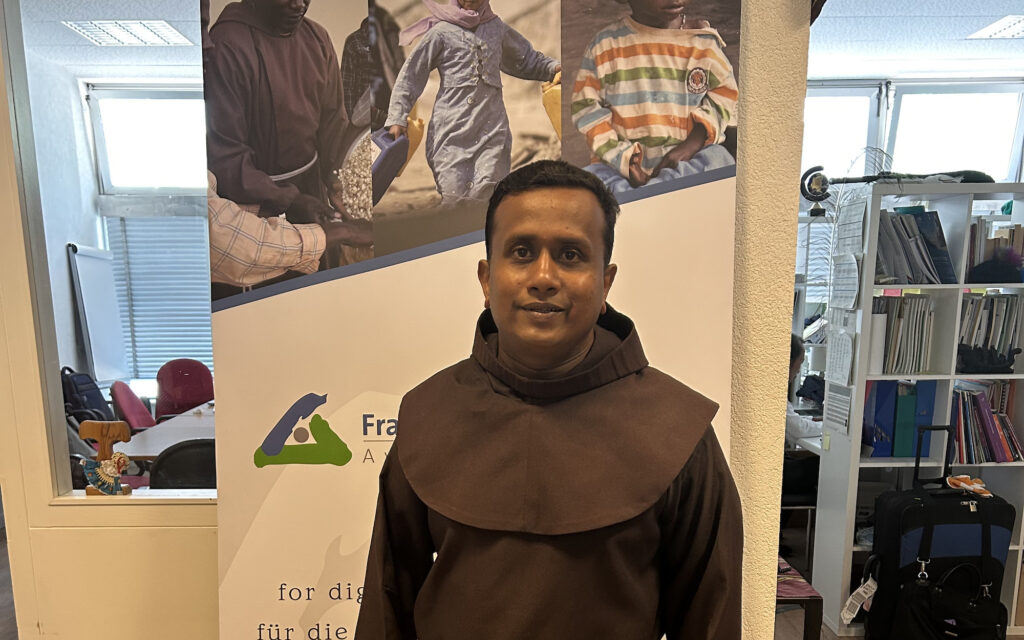
In this context, Brother Patrick Perera is working towards more justice and accountability for the human rights violations that shattered his country. We discussed with him the lack of transitional justice, how the Easter bombings impacted him, as well as his call to the population to unite.  


Can you introduce yourself and explain what are the main human rights issues in your country?  

My name is Patrick Sujeewa Perera, and I am a priest working for the Justice, Peace and Integrity of Creation (JPIC) Office in Sri Lanka. In the past few years, my country has faced a serious human rights crisis, so I have been engaging in activities to defend people’s rights. The first issue I see stems from Sri Lanka´s three decades of civil war between 1983 and 2009. Given the country’s brutal history, there are still strong tensions between the Sinhalese and Tamil communities. At the same time, mismanagement of the economy by the government and corruption led to an acute shortage of fuel and other necessary supplies, which caused the Aragalaya protests, in which we participated. The third issue is the increasing frequency of extreme weather events such as droughts and floods due to climate change, which are exacerbated because of unsustainable projects in the name of development. Finally, there is a lot of violence against human rights activists.  

What inspired you to start this work and how does it connect to your calling as a Franciscan brother? 

I started as a volunteer, but at that time I was not sure about what I was doing. It was when I personally witnessed the Easter Sunday attacks and saw people’s remains inside the church that I felt a profound change inside of me. I realized that if some people can do such terrible things against humanity, it is my personal duty to counter this. Even though I don’t expect to live in a world where there is no injustice at all, as a Franciscan, I will do what I can against it. Even now, when I am speaking at the United Nations, I remember that incident. Not only do I pray for the victims, but I raise their voices: I think that this is what my calling is about.  

What are you advocating for and why? 

We are advocating for more transparency and accountability of the government, which has the lives of ordinary people in its hands. This is especially important if we want to eliminate corruption in the political system. As both religious persons and human rights activists, it is our duty to keep them on the right track. They need to know that somebody is watching. I also think it is important to remind people that they have the power to change things. The Aragalaya protests actually helped with this, because people realized they have the power to protest, and they have the power to hold the government accountable if they are united.  

In your work, have you ever felt at risk, especially with the authorities targeting human rights defenders?  

With the work I do regarding the Easter bomb attacks, I was reminded many times to be careful with my activities, as we are demanding accountability and justice from the government. I also participated in the Aragalaya protests, where I faced tear gas or water attacks, but that is quite common. So far, I have not received personal threats, but I am still taking precautions to avoid being targeted.  

What is your proudest achievement?  

What I am proudest of is not something individual, but something we achieved as a group. After the Easter Sunday attacks took place, other religious leaders in the diocese of Colombo such as Archbishop Cardinal Malcolm Ranjith asked for an impartial investigation of this attack, but it did not happen. After this failed, the Cardinal wanted to bring the situation to the international level, but he did not have real tools or mechanisms. At that time, he and the Sri Lankan Catholic Church felt hopeless, as all the victims. It is thanks to the help of Franciscans International that our work at the grassroots was finally brought to the international level. As Franciscans, we have a good reputation, and we are respected – this is a great example of how group unity can be effective.  

How do you see the role of Franciscans evolving in Sri Lanka?   

We have always been doing charity work, but after the Easter bombings, we started mobilizing people, including other Franciscan groups. Since then, we have not only been doing advocacy by ourselves but have collaborated with the whole Franciscan family, such as the Franciscan Missionaries of Mary or the Capuchin friars. We also have civil society groups engaging with us, especially after the Aragayala protests. On top of that, we are now present at the international level, so if some groups don’t necessarily have access to the UN, we can help them by bringing their advocacy concerns to that level. Finally, the next step I see is discussing how we will keep working together as a family and strategizing on how we advocate to defend human rights.  

You can find all the statements delivered during this session below as they become available. Our past advocacy interventions are available here.


Item 10: General Debate – The Philippines (11 October)

Considering the prevailing impunity in the Philippines, we called on the Council to not only renew the mandate of the UN Joint Program on Human Rights in the country but to reconfigure its mandate to improve human rights accountability mechanisms. This extension should include a monitoring and reporting element, a counterpart role for domestic institutions, and meaningful participation for victims and their families. The program should also encourage the government to cooperate with the International Criminal Court.

Full statement (English)

Item 10: Interactive Dialogue on the report on the Democratic Republic of the Congo (9 October)

The human rights situation in the Democratic Republic of the Congo (DRC) remains dire, with continued armed clashes that result in massive population displacements and unlawful killings. While welcoming the reports of the High Commissioner and international experts, we pointed out the lack of mention of mineral resources governance. Indeed, the expansion of industrial mining in the country, particularly of cobalt and copper, has led to forced evictions, threats, and other human rights abuses. Furthermore, mining has had a devastating impact on human health, biodiversity, and food security. In that regard, we asked the Council to consider the challenges surrounding extractive resources governance in its technical assistance.

Full statement (French)

Items 3&5: Interactive Dialogue with the Expert Mechanism on the Rights of Indigenous Peoples – Guatemala (28 September)

During the armed conflict in Guatemala, the militarization of Indigenous lands spurred serious human rights violations including enforced disappearances, massacres, and forced displacement. However, the judicial system has failed to hold perpetrators to account, and a new initiative could grant amnesty to military personnel who committed these crimes. Moreover, the militarization of Indigenous lands continues to this day – 85 communities have been extrajudicially evicted since 2022. We called on the Human Rights Council to urge Guatemala to protect and respect the rights of Indigenous People, including their right to free, prior, and informed consent.

Full statement (Spanish)

Items 3&5: Interactive Dialogue with the Expert Mechanism on the Rights of Indigenous Peoples (28 September)

In a joint statement, we expressed our appreciation to the Expert Mechanism for their report on the militarization of Indigenous lands, in particular for giving visibility to the effects on economic, social, and cultural rights, as well as for including its view on the role of business opportunity. We also took the opportunity to raise three cases from Brazil, Guatemala, and Nicaragua where the rights of Indigenous Peoples continue to be violated.

Full statement (Spanish)

Annual Panel on the Rights of Indigenous Peoples – Guatemala (27 September)

Ostensibly to “develop the country,” Guatemala has opened the door to national and transnational companies as well as extractive projects. Often undertaken without consultations or free, prior, and informed consent of the affected communities, these projects have a disproportionate impact on the rights of Indigenous women through the exploitation of labor and unpaid work. In this joint statement, we urged all States to respect their international obligations and guarantee Indigenous women meaningful roles in decision-making processes.

Full statement (Spanish)

Item 4: General Debate – The Philippines (27 September)

Victims and their families are still seeking justice for the human rights violations committed during the so-called ‘war on drugs’, waged by former President Duterte. Despite the commitments by a new administration to end extrajudicial killings, over 400 cases have been documented since in July 2022. Ms. Amelia Santos – whose husband was the victim of an extrajudicial killing in 2016 – raised the continued harassment and lack of support for victims and their families. She called on the Council to review whether its engagement with the Philippines has resulted in appropriate mechanisms toward enforcing accountability and ending impunity.

Full statement (English)

Item 3: Interactive Dialogue with the Special Rapporteur on toxic wastes (19 September)

In Colombia, extractive industries are allowed to expand without consultation of affected communities that suffer the consequences. For example, the ‘La Colosa’ mine in Cajamara has caused irreversible environmental damage to protected areas and contaminated water sources. Considering this, we called on the government to support the Environmental Democracy Bill, which would help guarantee meaningful consultations of communities, prevent further environmental degradation, and compel action to mitigate the damage already caused.

Full statement (Spanish)

Item 3: Interactive Dialogue with the Special Rapporteur on water and sanitation – Solomon Islands (14 September)

Logging in the Solomon Islands limits the access to water of local communities and damaged aquatic ecosystems in the country. In this light, we welcomed the recommendation by the Special Rapporteur that companies must be held accountable for the degradation of aquatic systems and be forced to comply with their obligations to repair and compensate for these damages. Highlighting several challenges from the Solomon Islands, we called on the government to implement the commitments it made during its last Universal Periodic Review.

Full statement (English)

Item 2: General Debate – Guatemala (13 September)

In 2022, more than 3.574 attacks against individuals, organizations, and communities that defend human rights were documented in Guatemala. The human rights crisis that has engulfed the country is worsened by attempts to weaponize the judiciary to delegitimize the recent presidential elections. In a joint statement, we asked the Council to urge all Guatemalan institution to respect the will of the people and guarantee that election officials, journalists, and human rights defenders can carry out their work without fear of intimidation.  

Full statement (Spanish)

Thumbnail: UN Photo / Jean Marc Ferré

Franciscans International is excited to announce the launch of a new regional program covering Europe. We believe that expanding our geographical scope to complement both our global advocacy and the work already done in Africa, the Americas, and Asia-Pacific will add a valuable dimension to our efforts at the United Nations to defend human rights and dignity, promote peace, and demand environmental justice.
 
FI’s regional programs are driven by the needs of our Franciscan and other partners, working on human rights issues on the local and national levels. If they determine that their work can benefit from raising concerns at the UN, FI provides the technical expertise to develop and implement a sustained advocacy strategy. Over the past years, Franciscans throughout Europe have consistently expressed the desire to do so.
 
“Sadly, human rights abuses happen everywhere in the world and Europe is no exception,” says Markus Heinze OFM, FI’s Executive Director. “We see daily violations committed against migrants and refugees. European business interests play a critical role in the climate crises and violent conflict again afflicts the continent. Especially in these challenging times, I’m grateful that Franciscans have mobilized the resources that will let them bring the violations they witness and document in Europe to the attention of the UN.”
 
The position of Europe Program Coordinator will be filled by Eunan McMullan OFM. As a barrister, a former Director of Legal Services in the Office of the Police Ombudsman of Northern Ireland, and a Friar Minor, he brings a unique expertise to the position. Brother Eunan will use this to both foster new connections between European Franciscans and the UN and effectively shape the required advocacy activities. After an initial mapping of key partners and issues in various European countries, he will work as part of FI’s advocacy team in Geneva to raise these concerns with the relevant UN human rights mechanisms.
 
“In this year of 2023 we Franciscans celebrate the approval of the Rule of St Francis, which we aim to follow to bring peace to our hearts. Likewise, the rule of law is necessary to establish peace among people and it has been disrespected in many places,” says Brother Eunan. “The goal of this program is to shine a spotlight on the injustices that are occurring and to promote our human rights and seek redress from the relevant bodies.”

Children born today will grow up in a world where old certainties no longer apply. The rapid onset of the multiple environmental crises that started with past generations means that they will face profound challenges that are unique in our history. To address these problems, it is critical that the United Nations recognizes the importance of youth voices and considers the interests of future generations – especially those representing Indigenous Peoples.

Many Indigenous youth feel this uncertainty even more acutely: they were born into a situation where their identity, culture, language, lands, and traditional knowledge have been threatened for generations and, in some cases, are on the brink of extinction. This makes it all the more fitting that the theme of this year’s International Day of the World’s Indigenous Peoples recognizes youth as agents of change for self-determination.

Already, we see this new generation make its mark. In Guatemala, Franciscans International supports young Indigenous activists who have taken a prominent role in preserving their sacred rivers – and with it, the livelihoods of their communities – from destruction by business activities. In some communities in the Solomon Islands, young people have steered their elders away from the temptation of profiting from logging contracts, instead opting for carbon credits to preserve the forest and generate income. These efforts deserve our support. However, we cannot look toward the future without learning from our past.

This year also marks the 500th anniversary of the arrival of the so-called ‘Franciscan Twelve’, a first group of missionaries requested by Hernán Cortés, in Mexico. In part, they laid the foundation for the sisters and brothers that now work to support people on the margins of society – be it those living in extreme poverty, experiencing displacement, or indeed Indigenous communities. However, we must also acknowledge and address the reality that some Franciscans were a part of the oppression and destruction that was inflicted on many Indigenous Peoples.

The apologies offered by Pope Francis in 2022 to the First Nations of Canada are part of important steps in this process. Another important symbolic reckoning with the past is his repudiation earlier this year of the ‘Doctrine of Discovery’, which for centuries allowed explorers to colonize and claim lands in the name of their sovereign if they were not populated by Christians enabling the exploitation of resources by foreign entities that, in some cases, continue to this day. In this vein, we must heed the Pope’s call to approach Indigenous Peoples “on tiptoes, respecting their history, their culture, and their style of good living,” as well as consider how to remedy these historic justices inflicted upon them.

At the United Nations, being part of this process includes reinforcing the autonomy of Indigenous Peoples and amplifying their voices, rather than speaking in their place. To this end, FI is supporting human rights defenders to engage with different UN mechanisms, for example to better protect their right to free, prior, and informed consent – a right that allows Indigenous Peoples to give or withhold consent to business project that may affect them, their lands, or their resources. Recently, we have also focused our work on the further implementation of the newly recognized right to a healthy environment, including through utilizing the traditional knowledge held by Indigenous Peoples as guardians of much of the world’s remaining biodiversity.

More broadly, this means further opening UN spaces for substantial and meaningful participation of young people, going beyond token discussions or appointments. The problems of the future are here: future generations must play a role in shaping the solutions. Armed with the lessons of the past, Indigenous youth can indeed be the agents of change that we need – it is up to us to be of service and help them fulfill this role.

After a selection process involving several external human rights experts, Franciscans International has decided to appoint Budi Tjahjono as its new International Advocacy Director. 

An Indonesian national, Budi has over two decades of experience in human rights advocacy both at the United Nations and at the grassroots. Budi’s engagement as a human rights advocate includes work for academic institutions, social movements, and non-governmental organizations on three continents. He holds a master’s degree in development studies from The Graduate Institute (Switzerland). Budi joined FI in 2011 and has coordinated its Asia-Pacific program until now, while also serving as Deputy Advocacy Director since 2017.

“I am convinced that Budi’s expertise in UN advocacy, his long work experience with FI, and the large networks and trust he has built with the Franciscan family, civil society organizations and UN stakeholders put him in an excellent position to lead and develop the work of out advocacy team in the coming years,” said Markus Heinze, Executive Director. 

Budi will formally start in his new role on 1 October 2023. In the meantime, a transition period will allow him to fulfill his commitments to the Asia-Pacific program while FI opens a new recruitment process to find his replacement.

Today,the Global Coalition of Civil Society, Indigenous Peoples, Social Movements, and Local Communities for the Universal Recognition of the Human Right to a Clean, Healthy, and Sustainable Environment is one of the recipients of the prestigious 2023 United Nations Human Rights Prize.

Franciscans International is proud to be a member of this coalition, which receives the prize for its role in advocating for the recognition of the right to a healthy environment by the UN General Assembly in 2022.

The UN Human Rights Prize is awarded to up to five recipients once every five years. This year is the first time it has been granted to a coalition. The award will be presented in New York on 10 December, a date that also marks the 75th anniversary of the Universal Declaration of Human Rights.

A collective effort

This achievement was only possible thanks to tireless efforts that began decades ago and resulted in thousands of people from across the globe joining forces to achieve a milestone: the recognition by the United Nations of the human right to a clean, healthy, and sustainable environment. The award highlights the importance of collaborating to advance the much-needed protection for our planet and the fulfillment of human rights. Alone, no organization, movement, or person would have been able to achieve this goal. Together, a diverse global coalition made this a reality.

“The only way to realize a healthy environment for all is through sustained, unrelenting, and collective action. It is an encouragement to us all that the UN has decided to award this prize to a large, diverse, and global coalition that has found itself unified in this one critical goal – to preserve our common home in a time of crisis. The recognition of the right itself – and with it the acknowledgment that human dignity and the world around us are inextricably linked – resonates deeply in the Franciscan tradition.”

Markus Heinze OFM
Executive Director

Awarding the prize to a diverse coalition also highlights the need to protect participatory spaces for everyone. As civic space continues to shrink around the world, environmental human rights defenders have been among those most at risk. This prize is a strong reminder that it is essential to respect those working to place the protection of people and the planet at the forefront of policy making and global governance.

A recognition that calls for action

This announcement arrives just a few days ahead of the 28 July anniversary of the General Assembly’s recognition of the human right to a clean, healthy, and sustainable environment. Since then, millions have continued to experience the cumulative and accelerating impacts of the triple planetary crisis of biodiversity loss, climate change, and pollution, exacerbated by systemic inequalities, that is contributing to ongoing violations of the right to a healthy environment around the world.

This prize emphasizes that States must step up their efforts to make this right a reality. It is both a recognition and a call to action for governments, businesses, institutions, and people worldwide to ensure that the right to a clean, healthy, and sustainable environment is effectively guaranteed and legally protected so that it can be enjoyed by all.

“We have already seen some States take steps to better protect this right following its recognition. While these are encouraging signs, there must be further, more expansive action. With the members of this coalition and our grassroots partners, we will continue to work to monitor and advocate for implementation of this right.”  

Marya Farah
Representative to the UN in New York

The Americas have become increasingly vulnerable to extreme weather events. Long periods of drought alternating with heavy rainfalls and hurricanes are affecting millions of people. This is especially the case in the so-called ‘Dry Corridor’, where water scarcity and food insecurity have triggered large population displacements. 

Originally from El Salvador, Fray René Flores OFM works in Panama on issues related to human mobility, and advocates for the rights of displaced people across the region. We discussed what inspires his work, as well as the roots of his commitment to social justice. 

__________________________________________

Can you introduce yourself and explain your work? 

I am a Salvadoran Brother who was appointed by the Franciscan Province of Central America as head of the JPIC (Justice, Peace and Integrity of Creation) office in Panama. I am also a member of the Advocacy Committee of the Franciscan Migrant Network, for which I work on defending human and environmental rights. This includes accompanying migrants who cross the Darién Gap between Colombia and Panama, or Paso Canoas between Panama and Costa Rica. For this, I collaborate with the Clamor Network, whose goal is to strengthen Church organizations across Latin America and the Caribbean that welcome, protect, promote, and integrate people in situations of migration, displacement, refuge, and victims of trafficking.  

What inspired you to start working on these issues and how does it relate to your vocation as a Franciscan friar? 

I grew up in El Salvador in the 1980s and 90s, in the context of the civil war. At that time, many felt the call to serve and change the reality of the country, but this came with a price. Many priests, like Monsignor Óscar Romero or Cosma Spessotto, were assassinated for their commitment to helping the most vulnerable and calling for peace. This was also the case for friars that were killed during the civil war in Guatemala and the Sandinista revolution in Nicaragua. I started my journey as a Franciscan friar in this troubled context, which both challenged and inspired me to get involved in social justice. 

What is the main challenge today?                                   

A big challenge I see is the danger of apathy that leads to indifference in people. It is the risk of not wanting to get involved or organize social transformation because the system has already exhausted you, and you think that nothing can be done.  

What is your proudest achievement and what inspires you?  

The feeling of being with people walking in social transformation, who believe in Jesus Christ, and who at the same time are inspired to work towards a more just and fair society. It is walking with faith that inspires me the most to continue and to know that the Franciscan way fits very well in this journey with the people. 

What is your main objective? 

To strengthen the processes of organization and formation of the people I work with and for – not only peasants but also the whole Church. My goal is to be able to influence the Panamanian people so that they become involved along with other organizations and other pastoral agents in a process of transformation for better defense of life and creation. 

How do you see the difference between charitable work and human rights work, and how do you think they complement each other? 

I like the expression of Pope Francis who says that the highest and greatest form of charity is politics. Indeed, a good political decision can reach and benefit many people. But the term “charity” can usually only remain as assistance and help. Concerning the defense of human rights, I consider it best to talk about caring for the dignity and integrity of life. It is to seek that every human being and every living creature can exist in this common home, which is achieved through human rights work.  

For more information, check out our main article on Franciscans at the Forefront of Human Rights

As the effects of climate change have become increasingly felt in recent years, there has already been a steep rise in the number of displaced people as a consequence. Extreme weather events such as floods and hurricanes are becoming more frequent. At the same time, we also see slow-onset hazards, like desertification and sea level rise. This has already led to water scarcity, loss of agriculture and livelihoods, and the destruction of people’s homes, pushing them to relocate either internally or outside of their country’s borders.  

During his recent Interactive Dialogue with the UN Human Rights Council, Special Rapporteur on climate change Ian Fry presented his report on the human rights implications of climate-induced displacement. This is the first issue covered by the new mandate since its creation in May 2022, showing the urgency of this issue. In his report, Mr. Fry highlighted the lack of legal protection for persons displaced by climate change across international borders. For example, they are not defined as refugees under the 1951 UN Refugee Convention. While they are often informally called climate refugees, there is actually no such definition under international law, which exacerbates the risk of human rights violations against this group. 

Franciscans International and partners organized two side events on climate displacement as well as one on the regularization of migrants, inviting speakers from the Americas and Asia-Pacific to share their experiences and stories with UN human rights experts and diplomats. They called attention to the disproportionate impact of climate change events on vulnerable groups such as women, children, and Indigenous Peoples. Research indicates that climate-induced displacement is not a gender-neutral phenomenon, with women being 14 times more likely to get killed if they are displaced than men. They are also more vulnerable to sexual violence, trafficking, and the lack of access to reproductive health.  

Brother René Flores OFM, a member of the Franciscans Network for Migrants in Panama, explained the many ways in which people are impacted by climate change events, especially in Central America’s Dry Corridor*. While years of drought have led to water scarcity and food insecurity, hurricanes have also become more severe. In 2020, Eta and Iota caused floods and destruction across Central America, affecting millions of people. These events, combined with extreme poverty and violence, have driven substantial cross-border migration. 

While the loss of resources linked to human mobility is important, non-economic losses can also be devastating. Ms. Lemaima Vaai, a young Indigenous woman from the Methodist Church in Samoa, raised the issue of the emotional and spiritual pain of relocation. For communities in the Pacific, there is a deep attachment to the land that often brings “feelings of loss and disconnect” when having to move, as well as the risk of Indigenous knowledge being lost.  

Rev. James Bhagwan, General Secretary of the Pacific Conference of Churches, also warned that “Pacific leaders have already identified climate change as the single most important threat for regional security”. Indeed, it can become a driver of conflict over land and resources, especially with the sea-level rise threatening the very existence of some nations. As there would be no place to return to for these populations, this would trigger permanent displacements as well as profound questions about statehood and sovereignty.  

This is the case of the Republic of Kiribati, a group of 33 Pacific Islands of around 100.000 inhabitants, and one of the small islands developing states that is the most at risk of being engulfed. FI raised this case using the Universal Periodic Reviews of the country in 2014 and 2020 to push the international community to both recognize and address this issue.  

As the consequences of climate change are becoming more severe, it is necessary to address the current protection gaps and to have legal instruments and policies that reflect the ongoing situation. To achieve this, it is essential that decision-makers at the UN hear from those that are most directly impacted to understand the reality on the ground.  

FI joins the Special Rapporteur’s call for urgent action, especially considering the consequences of climate-induced displacement will only get worse every day we do not act. Together with our partners and Franciscan brothers and sisters at the grassroots, we will keep advocating for a human rights-based approach around climate displacement that ensures the respect of each person’s dignity.  

• • •

For more information about Franciscan work on human mobility, check out our publication: “Tearing Down the Walls” and our interventions at the United Nations.  

* “The Dry Corridor includes parts of Costa Rica, El Salvador, Guatemala, Honduras and Nicaragua. It is characterized by long periods of drought alternating with periods of heavy rainfall that seriously affect the livelihoods and food security of its 10 million residents.”

Below, you can find all the statements made on behalf of Franciscans International during the Council’s 53rd session. Our previous advocacy interventions are available here.

• • •

Item 6: Universal Periodic Review – Sri Lanka (10 July)

During the adoption of Sri Lanka’s Universal Periodic Review, we expressed our concern that recommendations on accountability, a policy to search for people disappeared during the civil war, and the need to have a comprehensive strategy on transitional justice and reconciliation were not supported by Sri Lanka. Building on the domestic efforts by the Sri Lankan Catholic church, we reiterated our call to conduct an independent call for an independent investigation into the 2019 Easter Sunday bombings.

• Full statement (English)

Item 6: Universal Periodic Review – Guatemala (7 July)

In a joint statement, we expressed our concern over the lack of political will by the government to accept key recommendations to improve the human rights situation in Guatemala. Given the critical situation in country, we called on the members of the Council to collectively urge Guatemala to guarantee judicial independence; to prevent and investigate attacks against journalists, activists, and justice operators; to guarantee the consultation and prior, free and informed consent of Indigenous Peoples; and to strengthen protection policies for women, people with disabilities, children and adolescents.

• Full statement (Spanish)

Item 6: Universal Periodic Review – Benin (7 July)

While welcoming the acceptance of several recommendations on children’s rights, we noted that in some parts of Benin, 40 percent of women still give birth without assistance of qualified medical professionals. Considering that proper care is also a key factor in the fight against ritual infanticide of children accused of witchcraft, we called on the government to pursue the construction of maternity units in at-risk areas, coupled with training and awareness raising of midwifes.

• Full statement (French and English)

Interactive Dialogue on the report of the Secretary-General on the adverse impact of climate change on the full realization of the right to food (4 July)

Climate change poses a serious threat to the full and effective realization of the right to food, disproportionately impacting those who have contributed the least to it. We welcomed the report of the Secretary-General and his findings on the link between deforestation and climate change. In the Solomon Islands, intensive logging is exhausting sea and forest resources, while bringing invasive species that destroy local agriculture. We urged the government of the Solomon Islands to reflect the report’s recommendations in their national policies, especially in the areas of forestry and sustainable land use.

• Full statement (English)

Interactive Dialogue with the Special Rapporteur on internally displaced persons (4 July)

During the Interactive Dialogue, we welcomed the inclusion of displacement resulting from climate change and generalized violence as key priorities for the mandate. Highlighting examples from Guatemala, Cameroon, and Indonesia, we raised several emblematic cases that were shared with us by our partners at the grassroots.

• Full statement (English and Spanish)

Annual panel discussion on the adverse impacts of climate change on the full realization of the right to food (3 July)

Rising temperatures, changing precipitation patterns, and greater frequency of both sudden and graduate disasters caused by climate change have damaged the productivity of agriculture, putting millions of people at risk of hunger and malnutrition. This disproportionately impacts countries and communities that are already vulnerable to food insecurity, like in Madagascar. FI delivered a statement on the situation in the country, where a prolonged drought, combined with three powerful hurricanes, jeopardized the local food system. We asked the panel what can be done to guarantee the right to food, especially in countries with limited financial capacity.

• Full statement (French and English)

Item 3: Interactive Dialogue with the Special Rapporteur on human rights and climate change (28 June)

Human mobility is one of the most urgent issues related to climate change. During this Interactive Dialogue we raised the risk of human rights violations in the Americas due to the lack of adequate policies and international protection mechanisms in this context. Already, tropical storms, coastal erosion, sea level rise, flooding, erratic rainfall patterns, prolonged droughts, and desertification affect marginalized communities, leaving them no other options but to flee to safeguard their lives and personal integrity. We called on States to comply with their international obligations to guarantee the human rights of all people displaced by the effects of climate change.

• Full statement (English and Spanish)

Item 3: Interactive Dialogue with the Special Rapporteur on the human rights of migrants (26 June)

Although the legislation of many countries in the Americas establishes non-discrimination based on migration status, the reality is often different. Many migrants experience obstacles while attempting to access regularization processes, including high costs, push-backs, and expulsions. This happens in a context where human rights defenders and shelters working to support migrants are facing hostility, harassment, surveillance, defamation, and aggression. During the Human Rights Council, we urged all States to address both the processes for regularization of migrants and the causes that prevent migrants from accessing them.

• Full statement (English and Spanish) 

Thumbnail: UN Photo / Violaine Martin